Home / Motorcycles in culture / Mission: Impossible
FILM SERIES / THREE MOTORCYCLES
Three Mission: Impossible films.
Three different motorcycles.
M:I-2 uses a stripped-back streetfighter, Rogue Nation moves to a fully faired superbike and Fallout turns to a scrambler. These three officially documented appearances show how the motorcycle changes with the character of each chase.
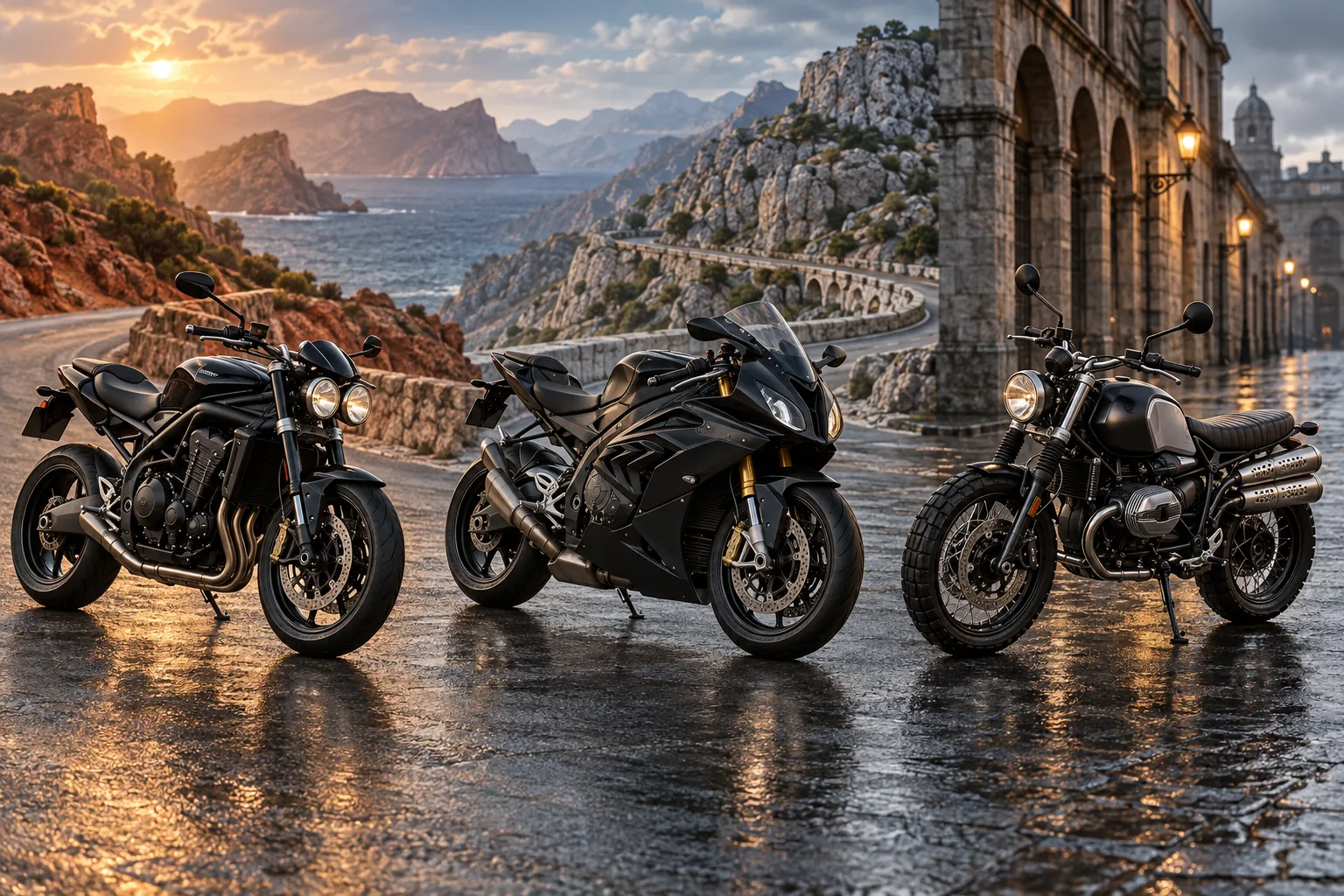
- M:I-2
- Speed Triple
- Rogue Nation
- S 1000 RR
- Fallout
- R nineT Scrambler
- Shared role
- Major chase scenes
Film by film: the motorcycle and its screen character
This list focuses on three motorcycles whose connection to the films can be verified in manufacturer material. Even within one franchise, the category and visual job of the bike change from film to film.
| Film and year | Motorcycle | Visual character |
|---|---|---|
| Mission: Impossible II 2000 | Triumph Speed Triple | A naked motorcycle with its mechanical parts exposed, reinforcing the close and physical feel of the action. |
| Rogue Nation 2015 | BMW S 1000 RR | A fully faired superbike used in the fast chase on mountain roads outside Marrakech. |
| Fallout 2018 | BMW R nineT Scrambler | A round-headlight scrambler whose practical, rugged form fits the pursuit through Paris. |
Film productions may use several motorcycles and alter them for filming. This guide identifies the model names supported by manufacturer sources; it does not claim an exact year, parts list or identical specification for every camera and stunt bike.
Mission: Impossible II: Triumph Speed Triple
Triumph's official brand history names Tom Cruise in Mission: Impossible II as one of the Speed Triple's screen appearances. Introduced in 1994, the Speed Triple is described by Triumph as the motorcycle that helped establish the idea of the factory streetfighter.
Its engine and frame remain visually exposed rather than hidden behind a full fairing. That puts the rider and machine in the same frame and gives the action a more physical quality than a smooth, aerodynamically enclosed superbike.
Rogue Nation: BMW S 1000 RR
BMW's 2015 partnership announcement confirms the S 1000 RR's appearance. A later BMW release looks back on Ethan Hunt riding it through the high-speed chase on the roads outside Marrakech.
Where the Speed Triple leaves its mechanical structure open, the S 1000 RR wraps the motorcycle in an aerodynamic fairing. A tucked riding position and forward-reaching bodywork make speed the dominant visual idea.
Fallout: BMW R nineT Scrambler
BMW's official material identifies the R nineT Scrambler in a major chase through Paris. A round headlight, exposed boxer engine and raised exhaust give it a deliberately utilitarian appearance, distinct from the technical surface of the S 1000 RR.
The progression is therefore not simply from an older bike to a faster-looking one. Naked machinery, aerodynamic bodywork and scrambler ruggedness are chosen to give each pursuit its own tone.
Explore those three ideas in current Japanese motorcycles
These are not replicas or direct successors. They are current Japanese models chosen to represent the same three broad categories—naked, fully faired and scrambler—at different capacities and performance levels.
Frequently asked questions
Which film features the Speed Triple?
Mission: Impossible II, released in 2000. Triumph directly connects Tom Cruise and the motorcycle with the film.
Where does the S 1000 RR appear?
In the high-speed pursuit on roads outside Marrakech, documented in BMW's own film-partnership material.
Are all the films tied to BMW?
No. Mission: Impossible II used a Triumph. BMW says its franchise partnership began in 2011.
Sources
- Triumph Motorcycles: Our Story — the Speed Triple's Mission: Impossible II appearance.
- Triumph Motorcycles: Brand Timeline — the Speed Triple's 1994 introduction.
- BMW Group PressClub: Rogue Nation partnership — the S 1000 RR's appearance.
- BMW Japan: Fallout partnership release — the R nineT Scrambler and a retrospective note on the S 1000 RR.
Ride at First Sight is an independent motorcycle guide and is not affiliated with the films or any manufacturer. Film and model names remain the property of their respective rights holders.