Home / Motorcycles in culture / Terminator 2
FILM / HARLEY-DAVIDSON FAT BOY
The Fat Boy in
Terminator 2.
The Terminator rides a Harley-Davidson Fat Boy into the flood-control channel. Here is how to recognise the 1990 original, how the jump was filmed, and which current Japanese motorcycles echo part of its low, substantial cruiser character.
- Film
- Terminator 2
- Motorcycle
- Fat Boy
- Model debut
- 1990
- Film release
- 1991
The short answer: it is a Harley-Davidson Fat Boy
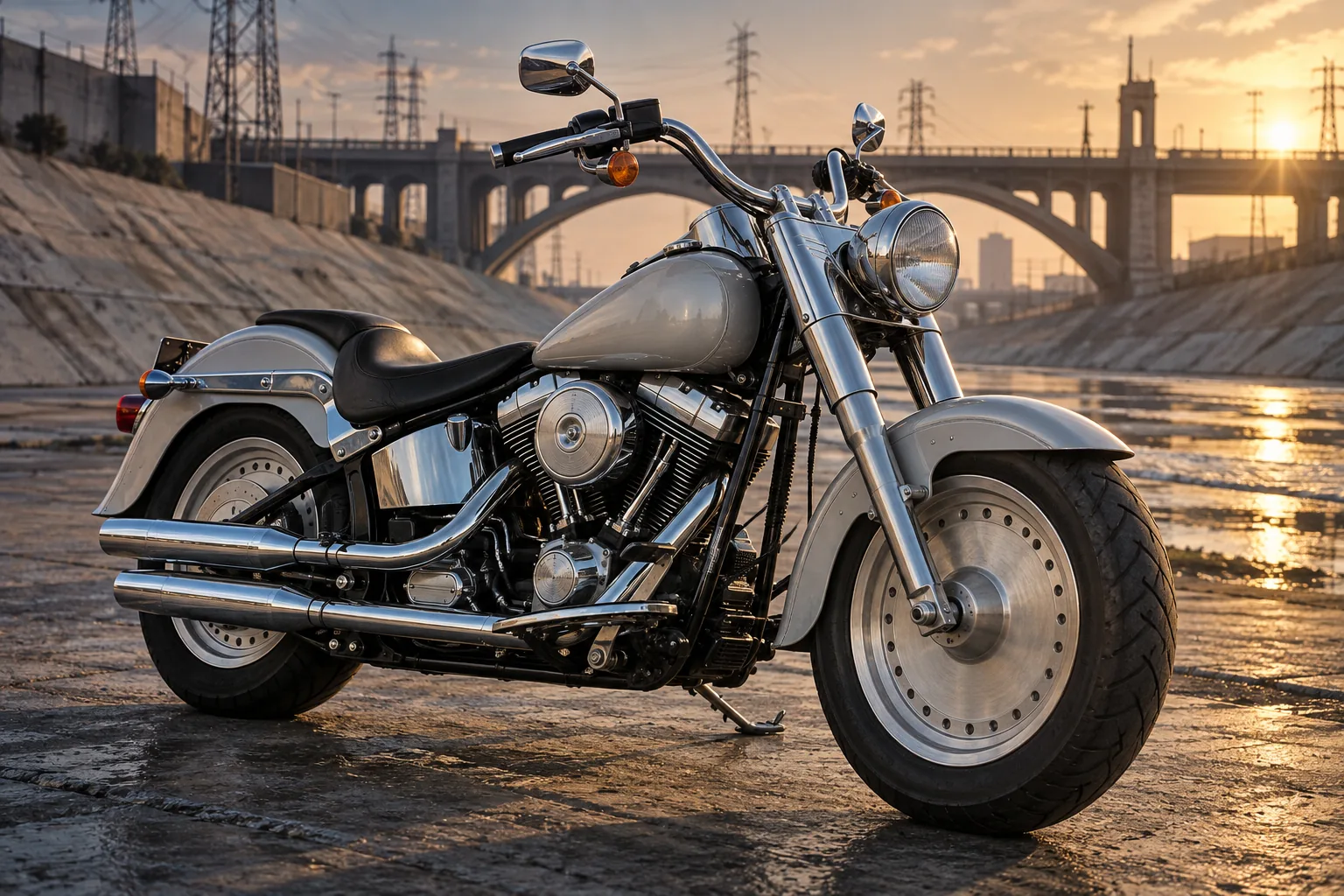
Harley-Davidson identifies the motorcycle ridden by Arnold Schwarzenegger's Terminator in the 1991 film as a Fat Boy. The large silver body and almost solid disc wheels are the clearest visual clues to the early model.
The Fat Boy reached showrooms for the 1990 model year, so it was still a new design when the film appeared. Its hard metallic finish fitted the film's visual world and helped turn a recently introduced motorcycle into a widely recognised screen bike.
Why the original Fat Boy is so easy to recognise
Harley Owners Group's official magazine describes the first version as the silver-only “Gray Ghost”. Wide tyres, a large fuel tank, broad fenders and solid wheels gave the motorcycle the substantial look promised by its name.
The Fat Boy name and broad silhouette continue, but the film bike and a current model are not the same specification. Silver paint, solid wheels and the low, wide stance are the most useful clues when identifying the early version.
How was the flood-channel jump filmed?
According to Harley Owners Group's official feature, the production used a genuine Fat Boy rather than a lightweight visual substitute. It was not simply dropped, however: cables attached near the rear of the seat and the front of the bike allowed cranes to control its flight and slow the landing.
The crew tested the arrangement 15 times so the motorcycle could touch down with its wheels still turning. The cables were removed from the finished image. The scene therefore combines the physical presence of a real motorcycle with carefully engineered control.
From the Fat Boy's presence to a motorcycle for today
If you are shopping among current Japanese models, use a low seat, a long silhouette and cruiser presence as separate filters. These three bikes are not Fat Boy successors or replicas; each carries only part of that visual idea into a different size and riding experience.
Frequently asked questions
Which motorcycle is it?
A Harley-Davidson Fat Boy. Harley-Davidson itself connects the model with the 1991 film.
Was the jump real?
A genuine Fat Boy was used, supported and slowed by cables and cranes. The arrangement was tested 15 times.
Can you still buy the same bike?
The Fat Boy name continues, but the film featured an early generation. Current models are mechanically and electronically different.
Sources
- Harley-Davidson: Fat Boy Gray Ghost — the original model year and its Terminator 2 connection.
- HOG Magazine Vol. 26: Flying a Fat Boy — the canal stunt and surviving film motorcycle.
Ride at First Sight is an independent motorcycle guide and is not affiliated with the film or any manufacturer. Film and model names remain the property of their respective rights holders.